
Color Vision Deficiency in Children: What is It and Why Does It Matter?
Color vision deficiency (CVD), often known as color blindness, affects the way a child perceives colors. This condition is primarily genetic and is typically seen more often in boys than girls. Around 1 in 12 boys and 1 in 200 girls experience some form of color deficiency. Understanding how this condition affects children not only helps parents support their child’s developmental needs but also plays a crucial role in ensuring safe learning environments in school and play.
Recognizing CVD early through proper screening can help educators adapt lesson plans and activities. For instance, kids may struggle with learning colors, which can affect their emotional well-being and social interactions. Accurate diagnosis and support are vital for children with color vision deficiency.
Signs and Symptoms of Color Vision Deficiency
Identifying color vision deficiency starts with recognizing the signs and symptoms. Parents should observe their child’s color recognition abilities as they grow.
- Infants and toddlers: Children at this age commonly rely on brightness and shapes. If a child seems to have trouble differentiating between brightly colored toys, it may be a sign of CVD.
- Preschool and early school age: If your child frequently confuses colors like red and green or blue and yellow, it is a reason to consider a screening.
- School-aged children: Watch for difficulties in completing color-based assignments, differentiating between colored pencils, or confusion during art activities.
Parents often wonder how they can support their child in a world so reliant on color. Early interventions, such as working with a Children’s Pediatric Ophthalmologist, can make a difference.
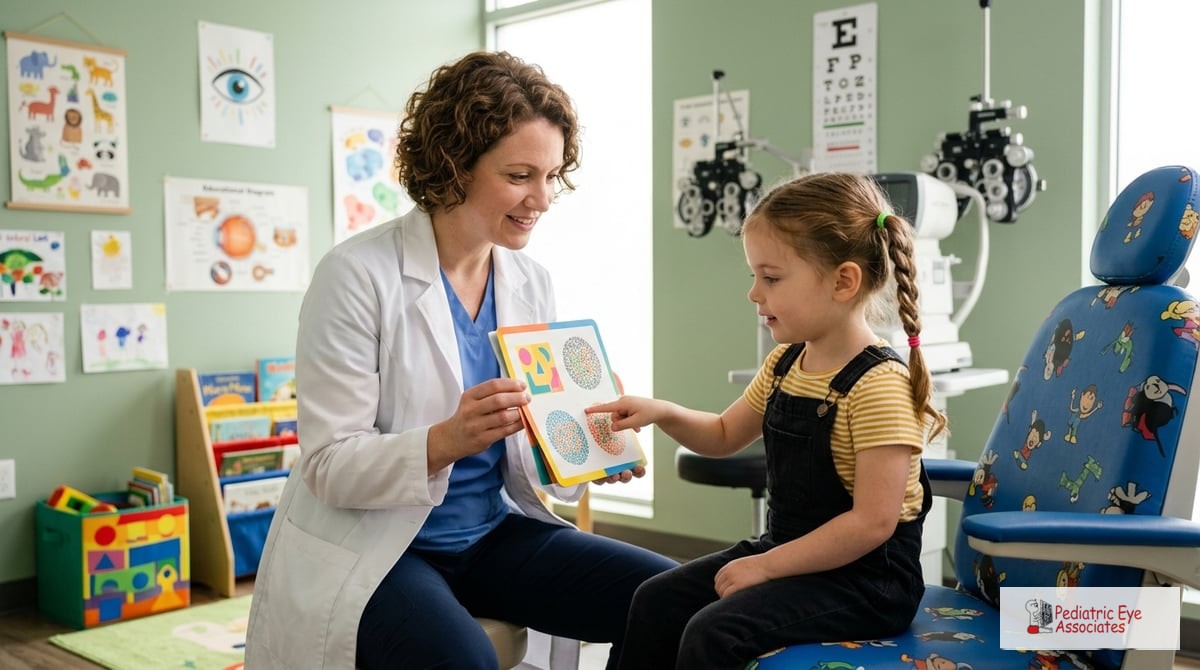
How Pediatric Eye Associates LLC Helps Screening for CVD
Pediatric Eye Associates LLC provides specialized care for children with color vision deficiency. Here, we emphasize a child-friendly environment, integrating eye exams with play to reduce anxiety.
During the colorful testing, our trained pediatric ophthalmologists, who are particularly adept at engaging young patients, evaluate how a child perceives colors. Using instruments that gauge color discrimination can clarify whether a child is experiencing a color vision deficiency. Our team, including experienced physicians, such as those in Our Doctors section, specialize in kid-friendly eye exams.
Daily Impacts of Color Vision Deficiency on Children
Children with color vision deficiency may face a variety of daily challenges that can affect their education and social interactions. Here are some key impacts:
- Education: In school, children may struggle with subjects involving art, geography, or even in math classes where colored markers or graphs are used. This deficiency can sometimes lead to frustration and can affect their academic performance if unaddressed.
- Play and Social Interactions: Identifying colors is essential in many children’s games and activities. Color vision deficiency can create feelings of isolation, as a child might find it difficult to participate in games where color recognition is key.
- Emotional Impact: The realization that they perceive colors differently from their peers can impact a child’s self-esteem. Through understanding and support, parents can help mitigate feelings of inadequacy.
By providing your child with the resources they need, such as consultations and testing at Pediatric Eye Associates, you can help improve their learning environments, boosting their confidence and success.
How Parents Can Support Their Child
If you suspect your child may have a color vision deficiency, take proactive steps to support their needs:
- Schedule an Appointment: Schedule an exam with a pediatric ophthalmologist to get an accurate diagnosis.
- Awareness and Understanding: Stay informed about color vision deficiency and share that knowledge with your child so they understand their unique perception.
- Adaptive Learning Tools: Use colored filters or special learning tools for homework and art projects that can help maximize their abilities.
- Encourage Open Conversations: Discuss any challenges your child faces. Encourage them to talk about their feelings regarding their color perception in a safe space.
For any eye care needs, consider visiting PD Optics – Pediatric Optical Shop in Livingston, NJ for specialized options.
Conclusion
Understanding color vision deficiency in children is integral to their overall development and well-being. Early screening through qualified pediatric ophthalmologists can help identify the condition promptly, facilitating necessary support and adaptations in both school and social settings. If you are concerned about your child’s color vision or wish to discuss potential strategies for support, schedule an eye exam today to set your child on the path to success.
Common Questions About Color Vision Deficiency
How is color vision deficiency diagnosed in children?
A pediatric ophthalmologist performs specific tests that assess how well a child can differentiate colors.
What are the types of color vision deficiency?
The main types include red-green color blindness and blue-yellow color blindness, varying in severity.
Is color vision deficiency hereditary?
Yes, it is typically inherited from parents, particularly affecting boys more than girls.
Can color vision deficiency be treated?
There is no cure for color vision deficiency, but adaptive methods can help improve quality of life.
When should I schedule an eye exam for my child?
It’s best to have an eye exam as early as age 3 and certainly before starting school to detect any possible issues.
This article was created with the help of AI. Images may also be AI-generated.